UX/UI designer | 2023 | WebVR tour
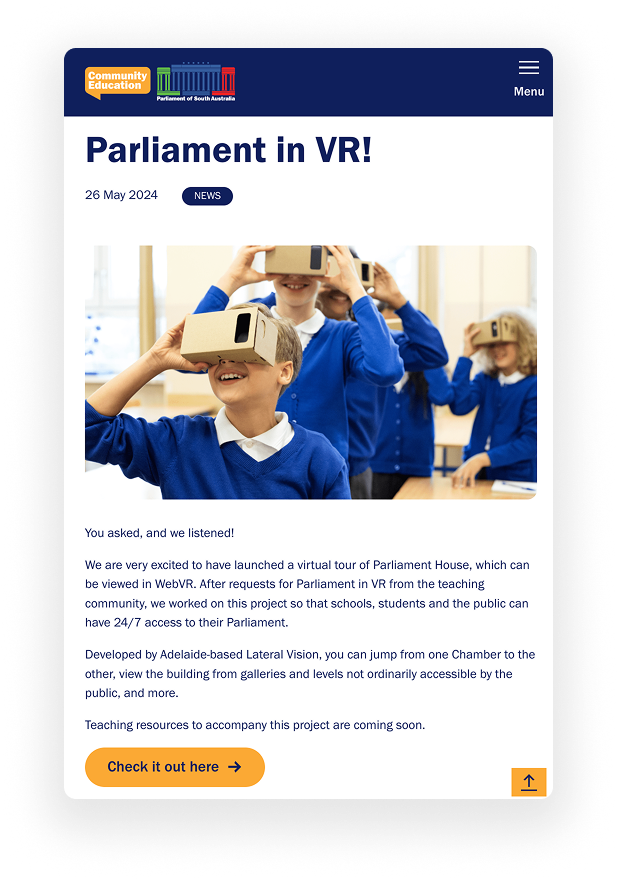
This project focused on designing the interface for a virtual reality tour of South Australia’s Parliament House, allowing students to explore civic spaces remotely through the web or a VR headset.
I focused on clear, minimal UI/UX design that supports exploration without distracting from the immersive 360° environment, while ensuring the experience works across desktop, mobile, and Google Cardboard headsets.
The project was delivered and publicly launched as part of an educational initiative.
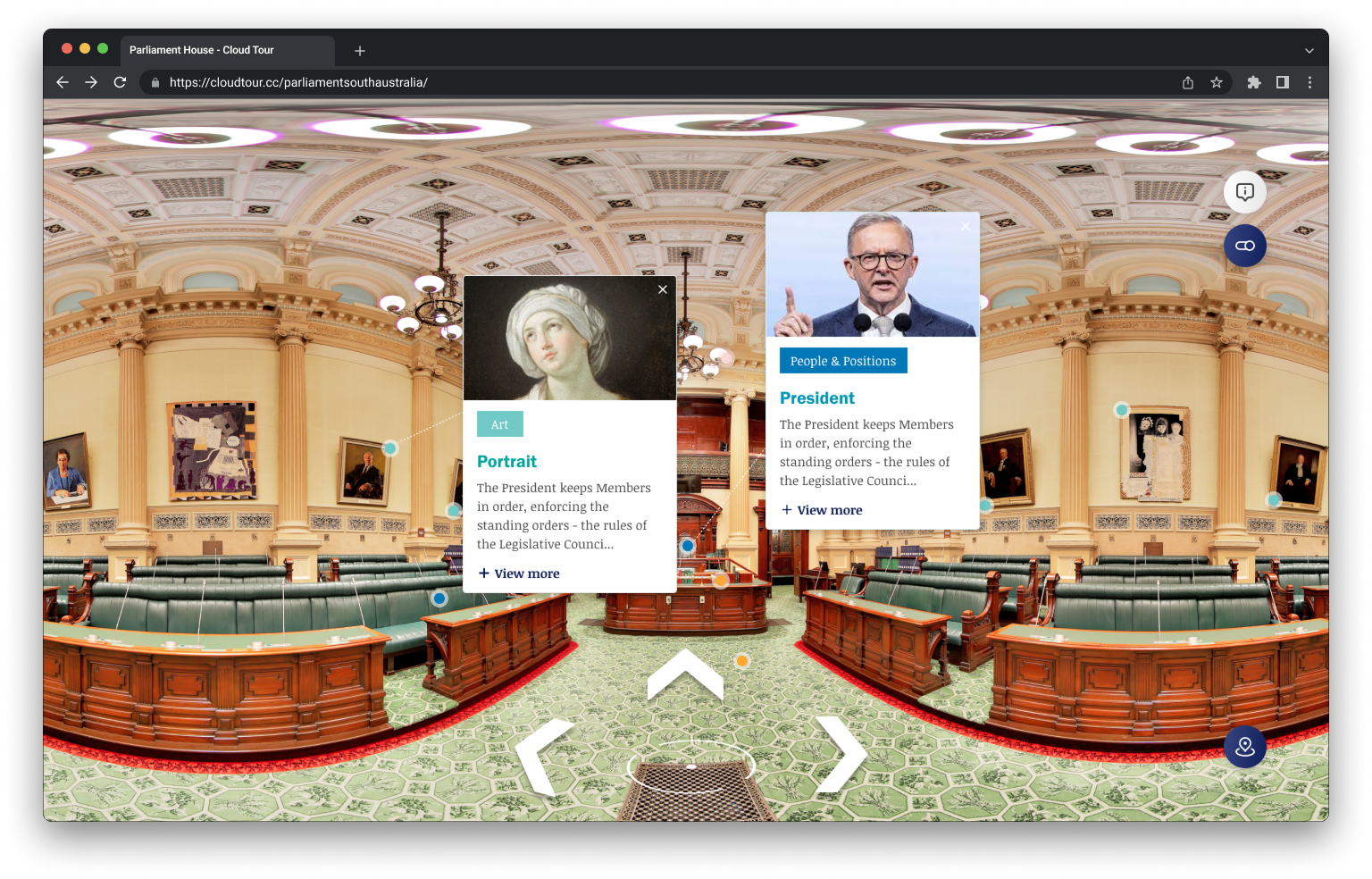
This project involved designing the interface for a virtual tour of the Parliament of South Australia, created as an educational resource for school students.
The tour allows students to explore Parliament House remotely on desktop or mobile through web, and can also be viewed in WebVR using Google Cardboard headsets. It is used by teachers in classrooms to support learning about parliamentary spaces and civic processes when in-person visits are not possible.
The experience is now live and publicly available.
The experience needed to balance education, accessibility, and immersion. Key constraints included:
A young audience (school students)
Dense informational content layered over 360° imagery
Designing intuitive controls for a WebVR experience that needed to work across devices.
The interface needed to feel appropriate for a formal civic space and on brand, while remaining engaging and easy to explore.
Designed the UI/UX for the WebVR tour
Translated a detailed brief and style guide into a clear interaction model
Ensured the interface worked across responsive web and Google Cardboard VR
Collaborated closely with stakeholders through iteration
Minimal, immersive controls
Navigation and UI elements were designed to stay out of the way of the 360° imagery while remaining easy to discover.
Layered information system
Categorised info icons (people, objects, art, general context) with toggle controls, allowing users to explore at their own pace.
Flexible infobox designs
Modular content patterns supporting text, images, video, and external links, designed for scrollable reading without breaking immersion.
Cross-platform compatibility
A single interface system that works for desktop, mobile, and Google Cardboard VR with simplified interactions for VR mode.

*House of Assembly - Art & People info preview initial design
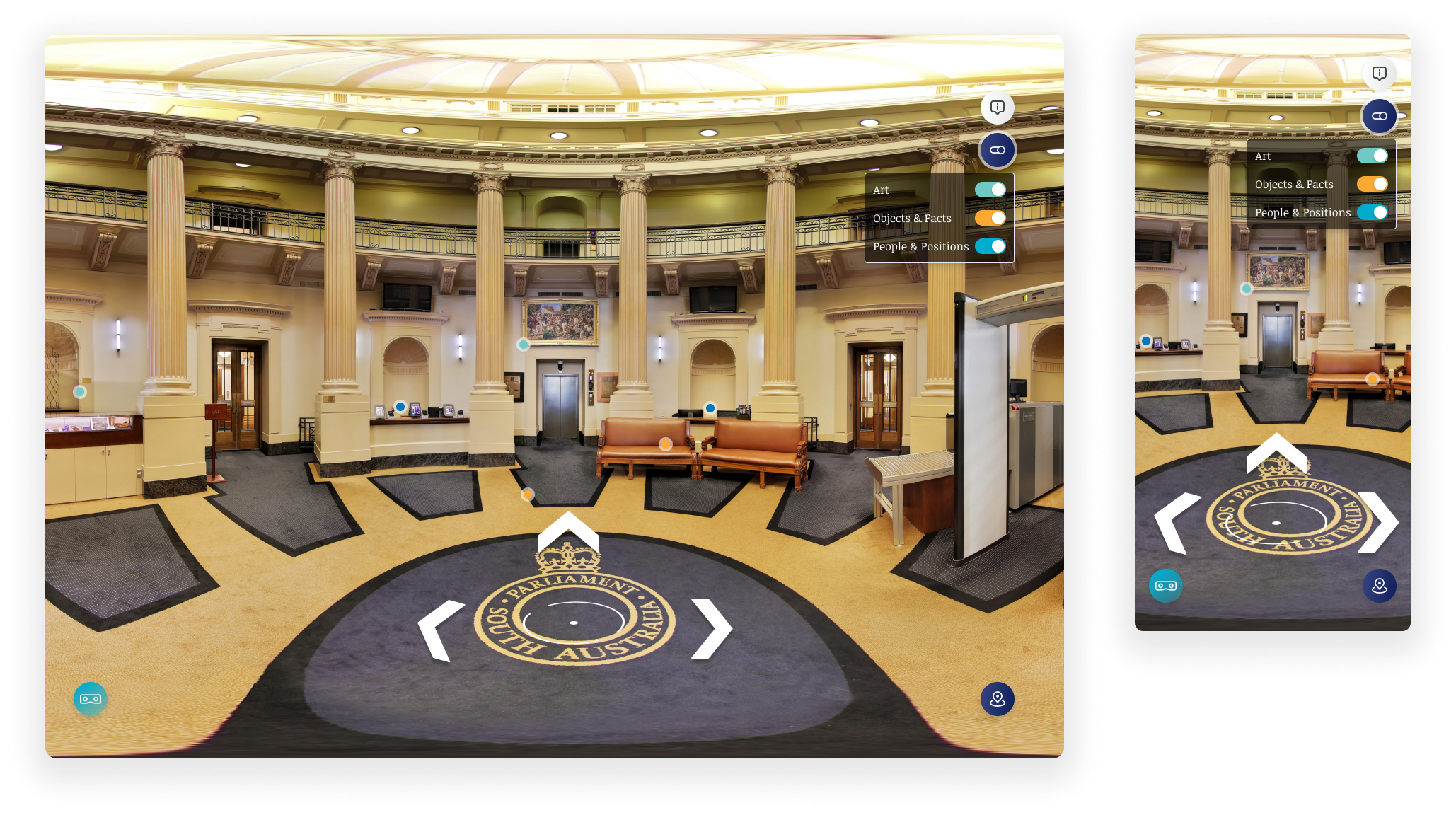
*Info icon toggle menu (responsive)
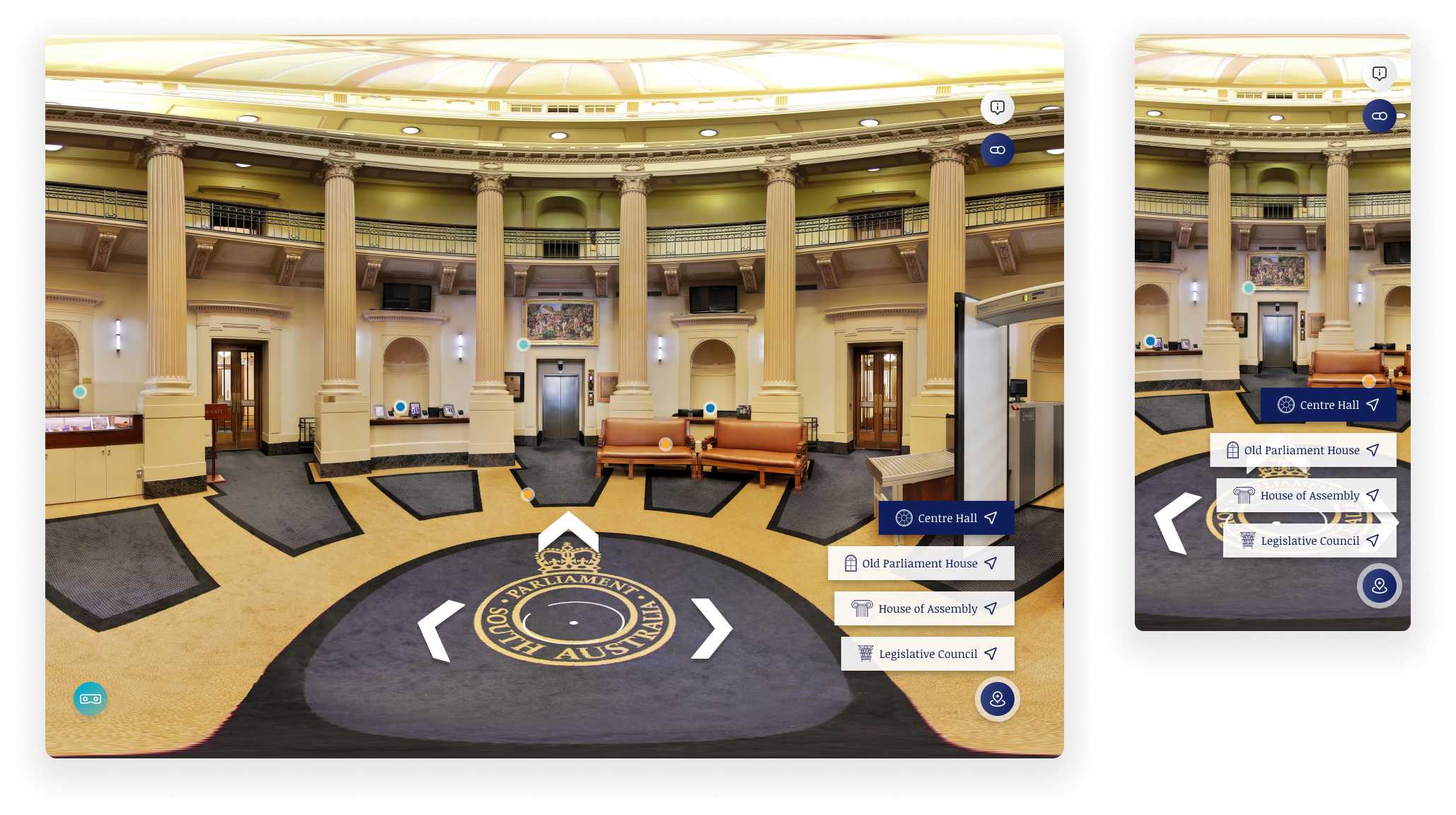
*Navigation menu (responsive)
The virtual tour was launched publicly in May 2024 and now live and used as part of an official educational resource.
Live tour: